Basquiat: A Revolutionary Voice in Contemporary Art
Embark on a captivating journey into the life and artistic genius of Jean-Michel Basquiat, one of the most influential artists of the 20th century. This blog post will take you through Basquiat's youth, early career, famous works, collaborations, and profound impact on the art world. Whether you're an avid art enthusiast or simply curious about this enigmatic figure, join us as we explore the captivating life and artistic brilliance of Jean-Michel Basquiat.
Youth and Growing Up
Born on December 22, 1960, in Brooklyn, New York City, Jean-Michel Basquiat's artistic sensibilities were nurtured by the rich tapestry of his Haitian and Puerto Rican heritage, as well as the vibrant street culture that permeated his surroundings. Growing up in this diverse and dynamic environment, Basquiat was exposed to a multitude of influences that would shape his artistic vision.
The fusion of his cultural backgrounds provided Basquiat with a unique perspective, allowing him to blend different artistic traditions, symbolism, and storytelling techniques. The vibrant colours, rhythms, and visual motifs of his heritage became intertwined with the raw energy and gritty aesthetics of the street culture that thrived in Brooklyn. This fusion gave birth to a distinctive visual language that resonated with audiences and set Basquiat apart as an artist.
However, Basquiat's journey was not without its challenges. His mother's mental illness cast a shadow over his upbringing, creating an atmosphere of instability and emotional turmoil. Yet, within the complexities of his personal life, Basquiat found solace, refuge, and a means of self-expression through art.
From an early age, Basquiat displayed an extraordinary talent for drawing and painting. Art became his sanctuary—a space where he could channel his thoughts, emotions, and experiences. He used his artistic practice as a means to navigate the complexities of his world, capturing the essence of his surroundings and expressing his unique perspective.
Basquiat's youth and formative years served as a crucible for his artistic development. It was during this time that his artistic voice took shape, fuelled by the diverse cultural influences and the profound personal experiences he encountered. The vibrancy of his heritage and the rawness of the street culture became integral elements in his creative process, manifesting in his distinct brushstrokes, symbolic imagery, and powerful narratives.
Early Career
During the late 1970s, a pivotal period in New York City's cultural history, Jean-Michel Basquiat burst onto the scene as a dynamic and influential artist within the graffiti and street art movement. Collaborating with his friend Al Diaz, the duo adopted the pseudonym SAMO (short for "same old shit"), and their thought-provoking and cryptic messages began to adorn the city's walls, electrifying the urban landscape.
Basquiat's street art emerged as a powerful form of social commentary, challenging conventional norms and sparking critical conversations about race, politics, and societal issues. The messages conveyed through SAMO's tags were often enigmatic and laden with symbolism, leaving observers to ponder their meaning and significance. This cryptic approach added an air of intrigue and mystery to Basquiat's work, drawing attention to the underlying messages and inviting viewers to engage in deeper contemplation.
Within a short period, Basquiat's distinctive style and subversive messages garnered attention and recognition in the art community. His unique blend of bold imagery, striking colours, and captivating wordplay stood out amidst the visual cacophony of the city. The SAMO tags became an indelible part of New York City's visual landscape, infiltrating the consciousness of passersby and igniting conversations about the social, political, and cultural climate of the time.
Basquiat's talent and subversive approach to street art elevated him to prominence within the graffiti and street art scene. His works resonated with both fellow artists and art enthusiasts, capturing the spirit of a generation and reflecting the energy and cultural dynamism of New York City. Basquiat's graffiti was not merely an act of rebellion or vandalism; it was a powerful form of expression that challenged the status quo and brought attention to marginalised voices.
The recognition gained from his graffiti and street art laid the foundation for Basquiat's transition into the gallery scene. As his reputation grew, he attracted the attention of art collectors, curators, and gallerists who recognized the raw talent and profound social commentary embedded within his work. Basquiat's journey from the streets to the gallery walls marked a significant turning point in his career, expanding his reach and influence within the art world.
Exhibitions
During the early 1980s, Basquiat transitioned from the streets to the gallery scene, captivating the art world's attention. His first solo exhibition at the Annina Nosei Gallery in 1982 showcased his raw and emotionally charged paintings, mesmerising critics and collectors alike. Basquiat's unique fusion of street art aesthetics, abstract symbolism, and expressive mark-making drew audiences into a world of vibrant colours and layered narratives, solidifying his position as a prominent figure in the art world.
Famous Works
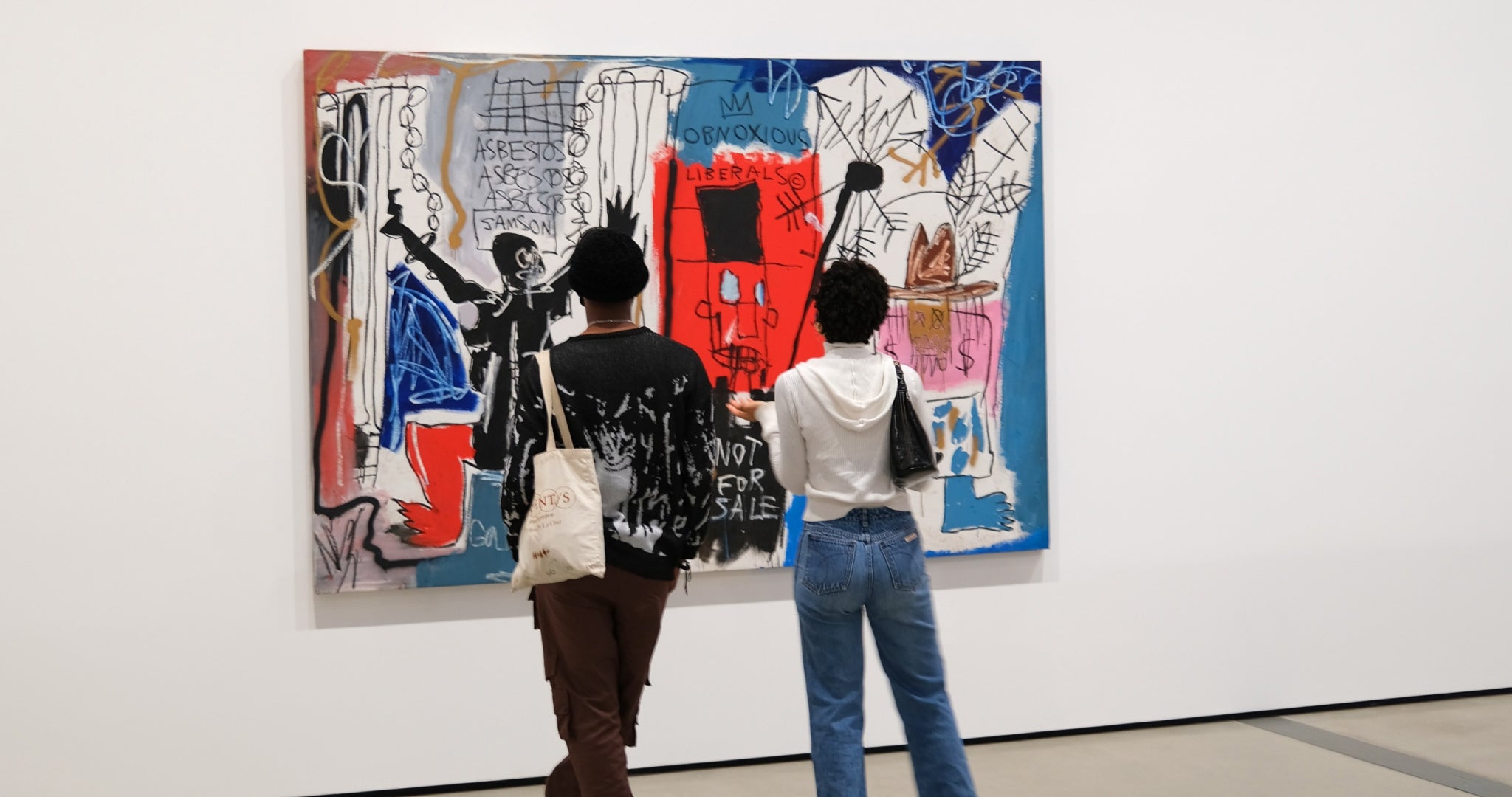
Basquiat's body of work exemplifies his artistic genius and boundary-breaking abilities. Here are a few examples:
1. "Untitled (Skull)" (1981): This iconic artwork features a vibrant and haunting skull, depicted with frenetic brushstrokes and enigmatic text, symbolising mortality and societal issues.
2. "Hollywood Africans" (1983): Challenging racial stereotypes, this piece portrays African American actors, including Basquiat himself, against a vibrant backdrop. It explores themes of identity, representation, and cultural appropriation.
3. "Riding with Death" (1988): This large-scale painting showcases Basquiat's signature style, combining vivid colors, expressive marks, and layered imagery. It invites viewers to contemplate the human condition and the fragility of life.
Collaboration with Andy Warhol
A significant milestone in Basquiat's career was his collaboration with renowned artist Andy Warhol. Their unique partnership blended Basquiat's raw energy with Warhol's pop art sensibilities. Collaborative works such as "Olympic Rings" (1985) merged their distinct styles, creating a dialogue between their respective artistic visions. This collaboration not only solidified Basquiat's position in the art world but also marked a significant moment in the intersection of street art, pop art, and contemporary art.
Cultural and Political Commentary
Basquiat's art served as a platform for cultural and political commentary, addressing racism, social inequality, and power structures. Through powerful visual symbols, text fragments, and juxtapositions, Basquiat challenged viewers to confront uncomfortable truths and engage in critical dialogue. For example, "Defacement" (1983) addressed the killing of a young black graffiti artist, Michael Stewart, by the New York City Transit Police. Basquiat's art became a voice for the marginalised and a vehicle for social critique.
Famous Quotes
Basquiat's words were as profound as his art. Here are a few memorable quotes that offer insight into his creative mindset:
- "I don't listen to what art critics say. I don't know anybody who needs a critic to find out what art is."
- "I start a picture, and I finish it. I don't think about art while I work. I try to think about life."
- "Believe it or not, I can actually draw."
Influences
Basquiat's artistic influences were diverse and eclectic, drawing inspiration from African art, jazz music, history, and the works of renowned artists such as Pablo Picasso, Jackson Pollock, and Cy Twombly. Basquiat synthesised these influences with his personal experiences, resulting in a distinctive style that defied categorisation.
Legacy and Posthumous Influence
Although Basquiat's life was tragically cut short at the age of 27 due to a drug overdose in 1988, his influence and legacy continue to reverberate through the art world. Basquiat's unique style and ability to bridge the gap between street art, graffiti, and fine art have inspired subsequent generations of artists. His impact can be seen in the works of contemporary artists who draw upon his themes, techniques, and exploration of cultural identity. Basquiat's art has also achieved record-breaking prices at auctions, cementing his status as an iconic figure in art history.
Cultural Impact and Popularity
Basquiat's popularity extends beyond the art world, permeating popular culture, fashion, music, and film. His art has been featured in numerous exhibitions worldwide, including major retrospectives at prestigious institutions such as the Museum of Modern Art (MoMA) and the Barbican Centre. Basquiat's legacy has been celebrated through documentaries, books, and films, such as Julian Schnabel's biographical drama, "Basquiat" (1996), introducing his life and art to a wider audience.
Conclusion
Jean-Michel Basquiat's artistic brilliance and cultural impact are undeniable. His ability to blend street art, graffiti, and fine art with profound social commentary elevated him to the status of an art icon. Basquiat's raw energy, visual language, and unapologetic approach continue to resonate with audiences worldwide. Immerse yourself in the vibrant and thought-provoking world of Basquiat's art, allowing his expressive brushstrokes, poignant messages, and enduring legacy to captivate your imagination.
People also read

Canvas vs Framed Prints: Which Wall Art Is Best for Your Home?
Choosing between canvas prints and framed art prints can completely transform your home décor. This guide explains the differences and shows why Noonstead is one of the best places to buy art prints online.

Wall Art Trends 2026 You Must Try + Tips!
Discover the top wall art trends for 2026. Shop Noonstead modern prints for oversized statement walls, gallery walls, botanical designs and abstract art — stylish, affordable, and curated for every home.
Gallery Wall Layout Guide: Spacing, Arrangement & Designer Tips
Learn how to design the perfect gallery wall with expert spacing rules, layout ideas, and Noonstead-curated print sets for balanced, stylish, and stress-free home decorating.

Wall Art for Small Apartments: The Complete Guide
Discover how to choose wall art for small apartments. Learn the best print sizes, layouts, gallery wall ideas, and styling tips to make small spaces feel bigger and beautifully balanced.

The Best Place to Buy Art Prints Online in 2026 - Bookmark Ready!
Looking for the best place to buy art prints online? Noonstead offers curated, exclusive prints with premium quality. See top alternatives like Artsy, Etsy & Tate.

Top 25 Home Decor Brands in the UK to Bookmark in 2026
A curated list of the top 25 UK home décor brands for 2026, spanning independent makers and high-street favourites. Highlights include Noonstead’s bold art prints, Studio Arhoj’s ceramics, and brands like Habitat, M&S Home, and IKEA.

The Only 2026 Buyer’s Guide to High-Quality Art Prints You’ll Ever Need
Master 2026 art print buying: styles, materials, eco-friendly options, and expert tips to curate a timeless home gallery.

Art Prints That Improve Mood, Productivity & Wellbeing: Science + Design Guide
Discover how the right art prints can boost mood, productivity, and wellbeing. Science-backed tips to style your home for calm, focus, and energy.

Designer Multi-Room Wall Art Planning: Step-by-Step Guide to a Cohesive Home
Plan wall art for your entire home with our step-by-step guide. Create a cohesive, stylish, and personalised space with Noonstead’s modern prints.
Nature-Inspired Modern Art Prints: How to Bring Calm & Style to Every Room
Bring calm, style, and eco-conscious design to your home with Noonstead’s nature-inspired giclée prints. Discover art that tells a story.
How to Choose Wall Art: A Designer’s Step-by-Step Guide (No Guesswork)
Learn how to choose wall art with confidence. A designer-led step-by-step guide covering size, colour, placement, and style — no guesswork required.
How to Choose Wall Art Colours: Expert Tips for Every Room
Learn how to select the perfect wall art colours for every room. Designer-approved tips for matching art with furniture, wall colours, and room mood.